How High-Quality Seeds Are Unlocking Africa’s Agricultural Productivity
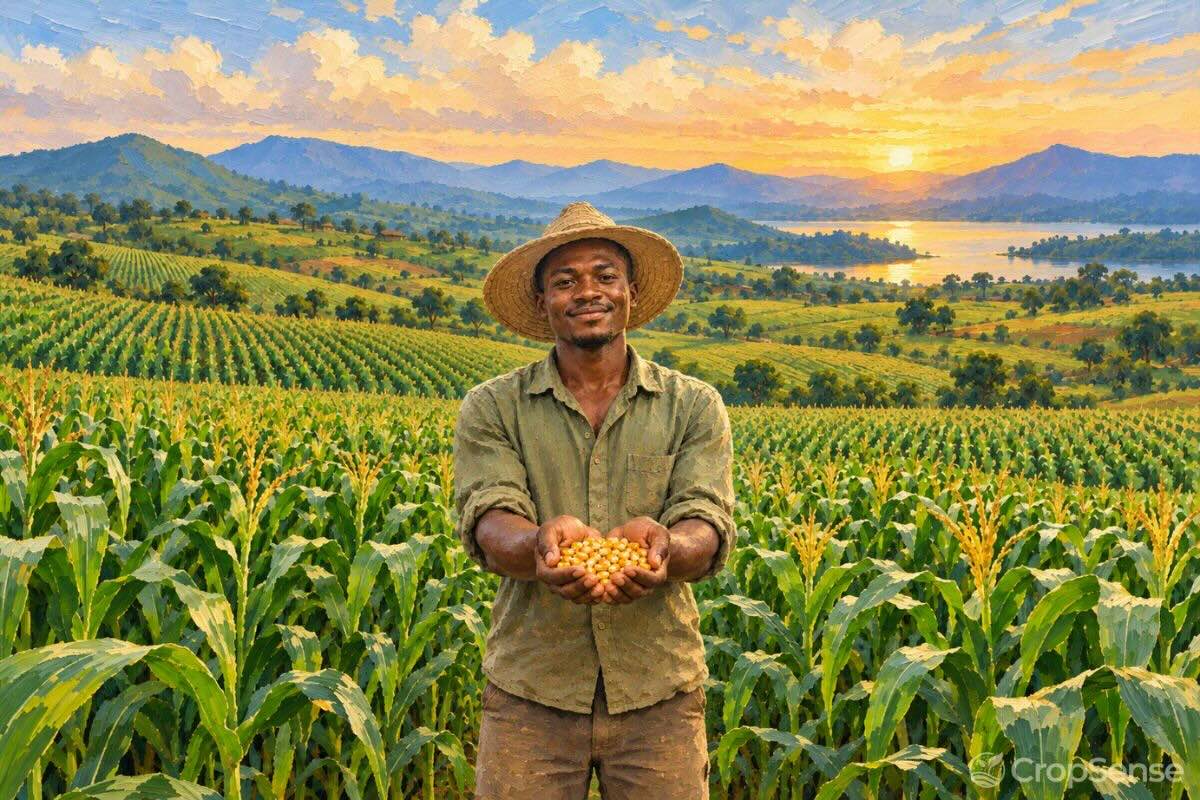
Every harvest starts with a seed. Before fertilizer, irrigation or pest control can make any difference, the seed in the ground has already set the limit on what the field can produce. Yet across much of Africa, farmers still plant seed saved from last year's harvest, bought loose at the market, or sold in a packet that is not what the label says.
The result shows up in yields. Nigerian maize farmers harvest less than two tonnes per hectare, while farmers in South Africa and Ethiopia get more than twice that from the same crop. Seed is not the only reason for that gap, but it is one of the cheapest and fastest ways to start closing it. And as rains become less predictable, the right seed is also a farmer's first protection against drought, floods and heat.
This guide is for farmers and cooperatives who want to get more from every bag of seed: what "high-quality" really means, which climate-resilient varieties are already proving themselves on African farms, how to avoid fake seed, and how to match the right variety to your field and season.
What Makes a Seed "High-Quality"?
A high-quality seed has two things going for it: good genetics and good physical condition. You need both.
- Good genetics (the variety): improved varieties are bred to yield more, resist local pests and diseases, and cope with stresses like drought or flooding. Hybrids give the highest yields but must be bought fresh each season. Open-pollinated varieties (OPVs) yield a little less but can be saved and replanted for a few seasons.
- Good physical quality (the seed lot): a high germination rate, no mixing with other varieties, free from seed-borne disease, and stored properly so it has not lost its strength.
Certified seed is seed that a national authority, such as Nigeria's National Agricultural Seed Council (NASC) or Kenya's KEPHIS, has inspected in the field and tested in the lab for both. That certification tag is what separates real improved seed from grain that has simply been repackaged and sold as seed.
One common mistake is replanting grain harvested from a hybrid. Hybrid vigour does not carry over to the next generation, so a farmer who saves and replants hybrid maize grain can lose much of the yield advantage they paid for, along with the even, uniform crop that made the hybrid worth buying.
Why Seed Matters More in a Changing Climate
African farmers are already planting into a less reliable climate: rains that start late or stop early, dry spells in the middle of the season, heavier floods and hotter days during flowering. The IPCC's latest assessment projects that, without adaptation, maize yields across Africa could fall by around a third at 2°C of global warming. With adaptation, including better-adapted varieties, much of that loss can be avoided.
That is why seed is now as much about managing risk as about chasing high yields. A variety that yields slightly less in a perfect year but still gives you a harvest in a dry one is often the better choice for a smallholder who cannot afford a lost season.
Climate-Resilient Varieties Already Working on African Farms
Plant breeders across Africa have spent the last two decades developing varieties for exactly these conditions. Many are already on the market:
| Climate risk | What to look for | Examples in use |
|---|---|---|
| Drought and mid-season dry spells | Drought-tolerant (DT) varieties | DT maize hybrids and OPVs from the DTMA programme, released in 13 countries |
| Drought plus stem borer and fall armyworm | Drought- and insect-tolerant maize | TELA maize (SAMMAZ 72T–75T) in Nigeria |
| Flooding in lowland rice fields | Submergence-tolerant rice | FARO 66 and FARO 67 in Nigeria |
| Shorter rainy seasons | Early- and extra-early-maturing varieties | Early-maturing maize, cowpea, sorghum and millet |
Drought-tolerant maize. Through the Drought Tolerant Maize for Africa (DTMA) project, CIMMYT and IITA worked with national research institutes and seed companies to release more than a hundred drought-tolerant varieties. These varieties match common commercial seed when rains are good and yield 20 to 30% more under moderate drought.
TELA maize. In January 2024, Nigeria approved four TELA maize varieties developed by the Institute for Agricultural Research, Samaru. They combine drought tolerance with resistance to stem borer and fall armyworm, two of the most destructive maize pests, and can reach up to 10 tonnes per hectare under good management.
Flood-tolerant rice. Ordinary rice dies after about a week under water. Varieties carrying the SUB1 gene, developed by AfricaRice and IRRI, can survive more than two weeks fully submerged. Nigeria released two of them, FARO 66 and FARO 67, for farmers in flood-prone lowlands.
Early-maturing crops. Where the rainy season is getting shorter, as across much of the Sahel and northern Nigeria, varieties of maize, cowpea, sorghum and millet that mature weeks earlier let farmers harvest before the rains stop.
One caution: trial results are not a guarantee. These varieties deliver their advantage when they are planted on time, in reasonably healthy soil, with good field management. A drought-tolerant seed planted late into poor soil will still disappoint.
Why Many Farmers Still Don't Plant Improved Seed
If improved seed works, why isn't every farmer using it? The reasons are practical:
- Fake and substandard seed. Counterfeit seed is the biggest trust problem. In Nigeria, more than half of crop seed sold has been reported as substandard or fake. Uganda's National Bureau of Standards estimates 30% of seed on its market is fake, and a study in Kenya found over 40% of seed packets in retail markets had at least one problem. One bad season with fake seed can turn a farmer off improved seed for years.
- Cost and cash flow. Certified seed costs more than saved grain, and it has to be paid for at planting time, when household cash is lowest.
- Distance and timing. Agro-dealers are often far from the farm, and seed sometimes arrives after the rains have started.
- Information. Farmers may not know which of the many varieties on offer suits their own field and rainfall.
How to Spot Genuine Seed Before You Plant
You can't tell good seed from bad by looking at it, but you can protect yourself:
- Buy from registered agro-dealers or directly from seed companies, not loose seed at the open market.
- Check the package. It should be sealed and unbroken, with a certification tag or label showing the variety name, lot number, test date and germination percentage.
- Verify the code. In Nigeria, NASC's SeedCodex scratch-off tag lets you confirm by SMS that the seed is genuine. Check whether your country's seed authority runs a similar system.
- Keep your receipt and a note of the lot number, so you can complain if the seed fails.
- Do a germination test. Count 100 seeds, roll them in a damp cloth or paper towel, keep them moist and warm, and count how many sprout after five to seven days. If the result is far below the germination rate on the label, take the seed back to the dealer before you plant.
That last step costs almost nothing and takes a week, but it can save a whole season. Researchers in Kenya found that farmers trained to check seed quality became more selective about where they bought and raised their maize yields as a result.
The Right Seed for Your Field and Season
Even genuine certified seed can fail if it is the wrong variety for the field. Before you buy, ask:
- How long do your rains really last? A 120-day maize variety needs rain until it fills its grain. If your season has been closer to 90 days in recent years, choose an early-maturing variety.
- What is your biggest climate risk? Dry spells, flooding, heat or pests? Pick the trait that protects against the risk you face most often.
- What is your soil like? High-yielding varieties need nutrients to reach their potential. A soil test tells you whether your field can support them, or what it needs first.
- When should you plant? Planting on the first rains is risky if a dry spell follows. Wait until the soil is properly wet, and use local forecasts to judge whether the rains have truly started.
Many farmers also spread their risk by planting two varieties with different maturity periods. If the rains end early, the early variety still delivers. If the season runs long, the later one makes the most of it. For more ways to protect your farm against weather shocks, see our guide to building climate resilience.
Why Cooperatives Hold the Key
Many of the barriers above are easier to solve as a group than alone. Cooperatives and farmer groups can:
- Buy in bulk, direct from certified suppliers. Larger orders bring better prices, cut out middlemen selling fake seed, and make it easier to get seed delivered before the rains.
- Plan seed needs early. Knowing each member's crop, field size and preferred variety months ahead avoids the late-season scramble.
- Run demonstration plots. Planting new varieties side by side with familiar ones lets members see results on their own soil before switching.
- Keep shared seed in good condition. Community seed banks in East Africa store and multiply locally adapted, climate-resilient seed so members have it on hand at planting time.
- Access credit and insurance together. Lenders and insurers are far more willing to finance seed and inputs for an organised group with good farm records than for individual farmers they know nothing about.
How CropSense Helps Farmers and Cooperatives Get More From Their Seed
Good seed works best with good information. CropSense AI gives farmers and cooperatives the data to choose, plant and protect their seed with confidence:
- CropSense Advisory: free farm advice on WhatsApp in Hausa, Yoruba, Igbo, Pidgin, Swahili or French, personalised with your crop, weather, soil and satellite data. Ask which type of variety suits your field, or whether the rains have settled enough to plant.
- Satellite crop monitoring: see how crops are establishing across every member's farm, catch patchy emergence early enough to replant, and compare how different varieties perform over the seasons.
- Verified farm records: build a record of what was planted, where and how it performed. Those records help cooperatives access input loans from lenders and crop insurance that pays out when drought or flooding strikes, so a failed season does not wipe out the money you put into seed.
Final Thoughts
Africa does not lack good seed. Drought-tolerant maize, flood-tolerant rice and early-maturing crops already exist and are already raising yields where farmers can get them. What holds farmers back is getting genuine seed of the right variety into the ground at the right time. As the climate becomes harder to predict, that is a challenge farmers and cooperatives cannot afford to ignore.
Not sure which variety suits your field this season? Ask CropSense Advisory on WhatsApp for free, personalised advice for your crop, soil and weather.