How African Agro-Exporters Can Ensure EUDR Compliance
The European Union Deforestation Regulation (EUDR) has been delayed twice, and it is easy for African cocoa, coffee, palm oil and rubber exporters to read those delays as a reprieve. It is not. The enforcement date has moved to 30 December 2026 for large and medium operators and 30 June 2027 for micro and small enterprises, but the underlying requirement has not softened: every shipment entering the EU must be traceable to a specific plot of land, and that plot must be proven free of deforestation after 31 December 2020.
What has changed since the regulation was first written is the compliance pathway itself. The EU now grades sourcing countries by risk, and that grade determines how much due-diligence work an exporter has to do. This guide walks through exactly what changed, what stayed the same, and the concrete steps an African exporter needs to take before the new deadlines arrive.
In short: collect GPS geolocation data for every plot you source from, confirm your country's risk tier, file a Due Diligence Statement (DDS) through the EU's Information System for every shipment, and keep five years of records. The country risk tier changes how much risk assessment you must do — it never removes the requirement to collect geolocation and production data in the first place.
What Is the EUDR?
The EU Deforestation Regulation (EUDR) is an EU law that bans certain agricultural commodities from entering the EU market unless the company placing them there can prove two things: the commodity was not grown on land deforested or degraded after 31 December 2020, and it was produced legally under the laws of its country of origin.
It replaces the EU's older, weaker Timber Regulation and extends the same logic to a much wider set of commodities. Concretely, it requires every company importing, trading or manufacturing with a covered commodity to:
- Know the exact GPS location of the farm or plantation the commodity came from
- Prove that plot has not been deforested since the end of 2020
- Run an internal due-diligence process assessing and, where needed, mitigating that risk
- File a Due Diligence Statement (DDS) for every shipment before it clears EU customs
For an African cocoa, coffee or palm oil exporter, this shifts the burden of proof: it is no longer enough for your product to actually be deforestation-free, you must also be able to demonstrate it with plot-level data on request. That is the compliance problem this guide addresses.
The New EUDR Timeline for 2026 and 2027
The EUDR was originally due to apply from December 2024. After sustained pressure from producing countries and EU industry groups, the European Parliament and Council agreed a second, longer delay in November 2025. Under Regulation (EU) 2025/2650, adopted by the Council in December 2025, the obligations now take effect on:
- 30 December 2026: large and medium companies (most exporters, aggregators and traders)
- 30 June 2027: micro and small enterprises
That leaves roughly three months for large and medium operators and nine months for smaller ones. Given that GPS-mapping thousands of smallholder plots and digitizing years of production records takes months, not weeks, exporters who have not started yet need to start now.
Which African Exports the EUDR Covers
The regulation applies to seven commodity groups and their derived products: cocoa (chocolate, cocoa butter), coffee, palm oil, rubber, soy, wood and timber, and cattle products (leather, beef). For African exporters, cocoa and coffee carry the most exposure — the EU absorbs more than half of Africa's cocoa exports and over 40% of its coffee exports, and both crops are grown extensively at the forest margin, which is exactly what the regulation is designed to police.
Understand Your Country's Risk Tier
This is the part of the regulation that changed most since the original 2023 text. In May 2025, the European Commission published its first country benchmarking list under Commission Implementing Regulation (EU) 2025/1093, sorting every sourcing country into low, standard or high risk based on its deforestation trends and forest governance.
For the continent's major exporters, the picture looks like this:
| Country | Risk tier | What it means for you |
|---|---|---|
| Ghana | Low | Simplified due diligence available under Article 13 |
| Cote d'Ivoire | Standard | Full risk assessment and mitigation required |
| Nigeria | Standard | Full risk assessment and mitigation required |
| Ethiopia | Standard | Full risk assessment and mitigation required |
| Uganda | Standard | Full risk assessment and mitigation required |
Only four countries worldwide were rated high risk (Belarus, Myanmar, North Korea and Russia) — none of them African. Most African producing countries sit in the standard tier, meaning full due diligence applies. A smaller group, including Ghana, sits in the low-risk tier: operators sourcing only from those countries can skip the formal risk-assessment and risk-mitigation steps under Article 13, provided nothing they learn along the way suggests a specific plot is non-compliant.
One important nuance: simplified due diligence is not the same as no due diligence. Even a low-risk-country exporter must still collect the same geolocation and production data required under Article 9 and run a due-diligence system under Article 12 — they simply are not required to additionally assess and mitigate risk for every consignment. Skip the underlying data collection and you are still non-compliant, regardless of your country's rating.
"51% of importing operators now qualify for simplified due diligence under Article 13, compared with the 20% originally projected in the regulation's impact assessment." — European Commission benchmarking data, 2025
The Core Due-Diligence Obligations, Regardless of Risk Tier
Whatever tier your country falls into, every consignment entering the EU needs a Due Diligence Statement (DDS) filed through the EU's Information System, built on three things:
- Geolocation data: the GPS coordinates of every plot of land the commodity was produced on. Plots over four hectares need polygon boundaries, not just a single point.
- Production and legality documentation: planting and harvest dates, and proof the commodity was produced legally under the laws of the country of origin (land tenure, environmental and labor rules).
- A due-diligence system: an internal process, under Article 12, for gathering this data, screening it against deforestation risk, and keeping records for at least five years.
Step-by-Step: Getting Export-Ready Before the Deadline
Step 1: Map Every Plot You Source From
Start with GPS geolocation of every farm plot in your supply chain, whether you buy from a handful of estates or thousands of smallholders through an aggregator network. This is the single most time-consuming step, and the one most exporters underestimate.
Step 2: Screen for Deforestation Against the 2020 Cut-Off
Overlay your mapped plots against satellite forest-cover history to confirm no deforestation occurred on that land after 31 December 2020. This has to be evidence you can produce on request, not a verbal assurance from a supplier.
Step 3: Confirm Your Country's Risk Tier and Set Your Due-Diligence Depth
Check your sourcing country (or countries, if you buy across borders) against the EU's benchmarking list, and size your due-diligence process accordingly. If you source from a mix of low- and standard-risk countries, you will need to run the fuller process for the standard-risk portion of your supply.
Step 4: Digitize Production Records
Planting dates, harvest volumes, and chain-of-custody from farm gate through aggregation, processing and storage all need to exist as structured, retrievable records — not paper logbooks scattered across purchasing agents.
Step 5: File the Due Diligence Statement for Every Shipment
Submit your DDS through the EU's Information System before the goods clear customs, referencing the geolocation and legality data you have already compiled. Each statement receives a reference number your EU buyer will ask for.
Step 6: Keep Records for Five Years and Stay Audit-Ready
Competent authorities in EU member states can request your underlying evidence at any point within five years of the DDS submission. Treat your compliance file as a living system, not a one-time export document.
Common Pitfalls Exporters Should Avoid
- Assuming a "low risk" country rating removes the need to collect geolocation data — it does not.
- Mapping farms once and never re-verifying land use, when deforestation screening needs to reflect current conditions.
- Relying on aggregators' informal assurances instead of digitized, plot-level records you can produce on request.
- Waiting until the final weeks before the deadline to start, when GPS-mapping and digitizing records across a smallholder network realistically takes several months.
How CropSense Helps African Exporters Get Ahead of EUDR
CropSense AI gives exporters and aggregators the digital infrastructure to build an EUDR-ready compliance file without reinventing it from scratch:
- GPS Farm Mapping: capture plot-level geolocation and boundary data across smallholder networks
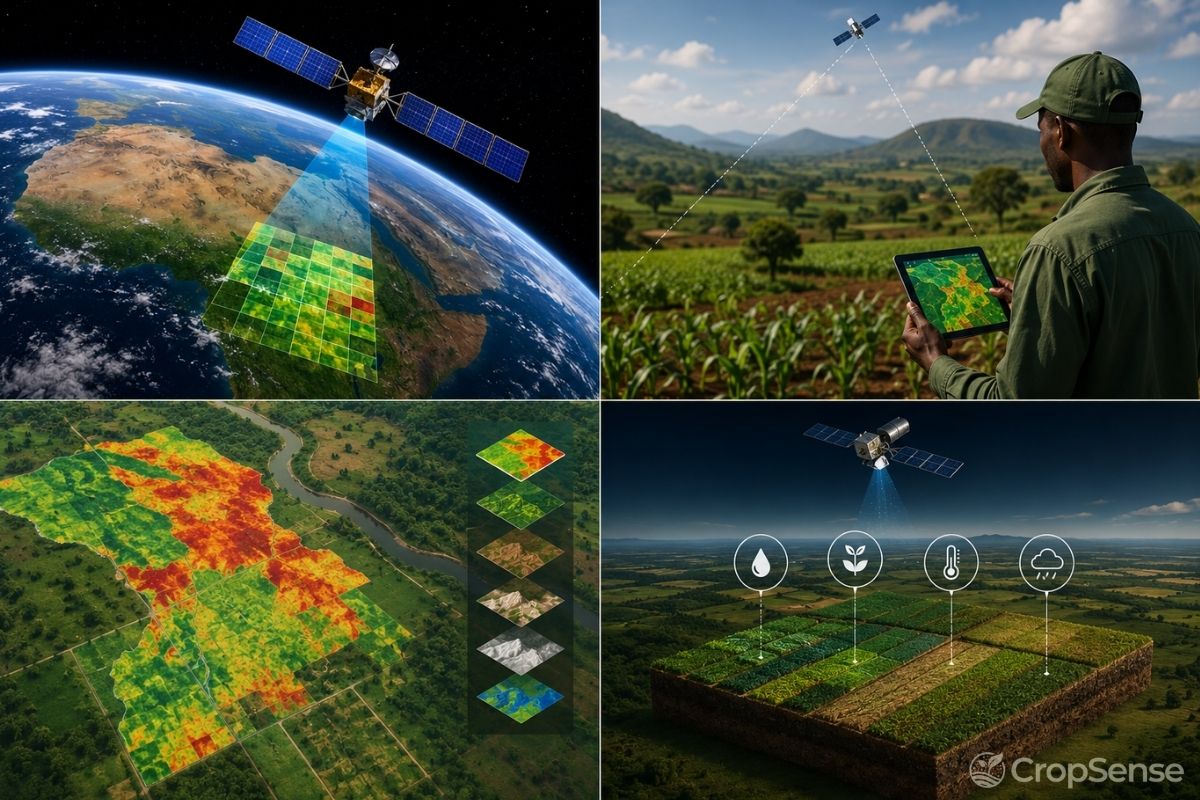
- Satellite Deforestation Monitoring: screen sourcing land against the December 2020 cut-off and flag land-use changes automatically
- Digital Production Records: replace paper logbooks with structured, retrievable farm activity data
- Traceability Dashboard: maintain a plot-to-port view of your supply chain that is ready to show a buyer or auditor on request
Whether your country sits in the low- or standard-risk tier, the underlying work is the same: know exactly where your commodity comes from, and be able to prove it. CropSense AI exists to make that provable, at the scale African export volumes require.
Final Thoughts
The EUDR's deadlines have moved twice, but the direction of travel has not: traceability is becoming table stakes for access to the EU market, and the exporters who treat the remaining months as preparation time — rather than waiting for a third delay — will be the ones still shipping in January 2027.
Ready to find out where your supply chain stands? Reach out to CropSense AI for a walkthrough of what plot-level EUDR compliance looks like for your crop and country.