
Lucrative Agricultural Commodities for Export from Africa in 2026
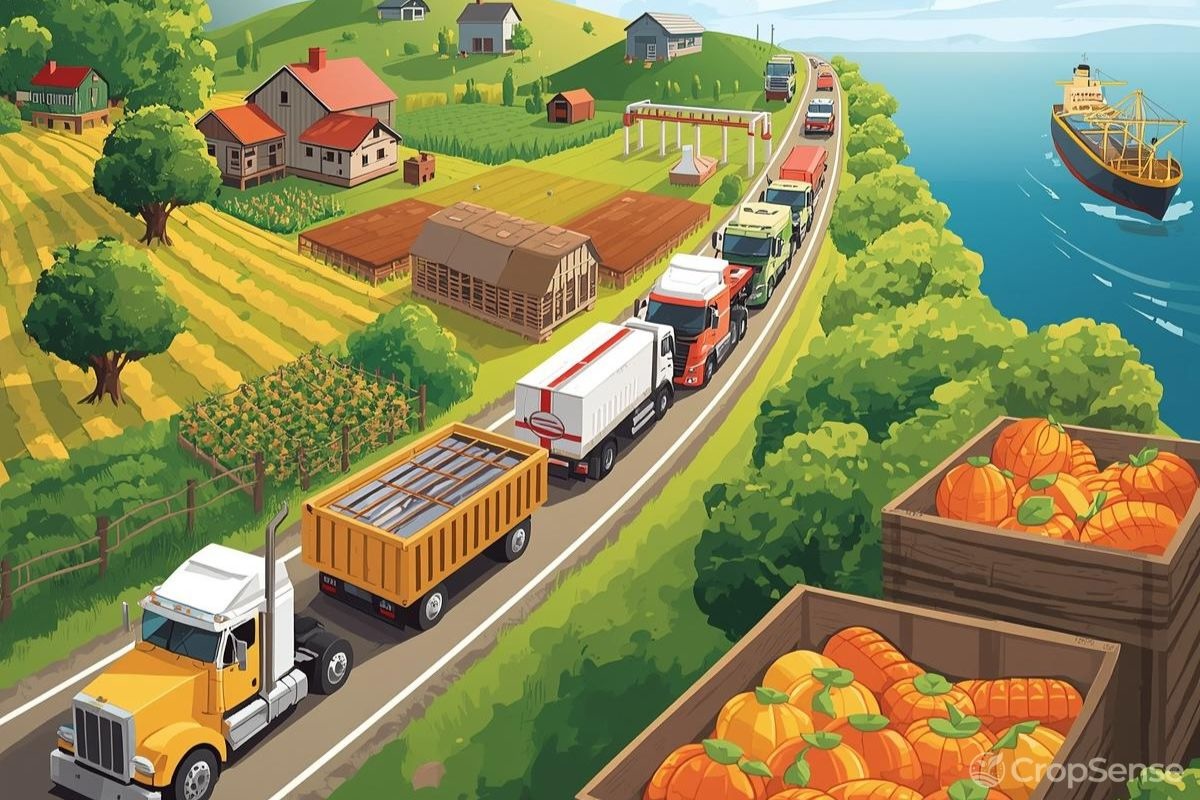
Agriculture remains the backbone of the African economy, but the real wealth lies in the transition from local farming to global exporting. With the African Continental Free Trade Area (AfCFTA) gaining momentum and global demand for organic, sustainably sourced products is at an all-time high, there has never been a better time for agribusinesses to look toward international markets.
At CropSense AI, we understand that data-driven decisions are the key to high-yield success. Below is a comprehensive guide to the most lucrative commodities currently driving Africa's export boom, ordered by their global market significance and popularity.
1. Coffee
Coffee is Africa’s "liquid gold," standing as one of the most traded commodities globally with a market size exceeding $125 billion. The industry primarily uses African beans, specifically Arabica and Robusta, for premium beverage blends, pharmaceutical caffeine extraction, and high-end cosmetics. Ethiopia, the birthplace of coffee, and Uganda are the continent’s leading exporters, primarily shipping to Germany, the USA, Italy, and Japan.
Cultivating coffee requires precision, as it thrives best in high-altitude regions with specific volcanic soil profiles. While it is a labor-intensive crop involving meticulous picking and washing, it offers an exceptional shelf-life; green coffee beans can be stored for one to two years without losing quality, making them ideal for long-distance maritime freight.
2. Palm Oil
Palm oil is the world’s most versatile vegetable oil, utilized in everything from packaged foods and snacks to biodiesel and soaps. The global market is valued at approximately $70 billion, and while Southeast Asia leads in volume, African nations like Nigeria, Côte d’Ivoire, and Cameroon are rapidly expanding their export footprint. Major destinations include India, China, and the European Union, where the demand for sustainably certified palm oil is surging.
Oil palms are relatively easy to grow in tropical belts, offering the highest yield per hectare of any oilseed crop. While the fresh fruit bunches must be processed within 24-48 hours to prevent spoilage, the resulting crude or refined palm oil has a stable shelf-life of over 12 months, providing exporters with a significant window for international logistics.
3. Cocoa
Africa is the heartbeat of the global chocolate industry, producing over 70% of the world's cocoa. With a global market size for cocoa and its derivatives nearing $50 billion in 2026, the demand for African beans is insatiable. Côte d’Ivoire and Ghana are the undisputed leaders, followed by Nigeria and Cameroon. These beans are primarily exported to the Netherlands (the world's grinding hub), Belgium, and the USA to produce chocolate, confectionery, and cocoa butter for skincare.
Growing cocoa is a delicate balancing act; the trees require specific shade and are sensitive to pests like the "Swollen Shoot" virus. However, once the beans are fermented and dried correctly, they possess a robust shelf-life of up to two years, allowing exporters to wait for favorable market price fluctuations before shipping.
4. Cotton
Often referred to as "White Gold," cotton is the lifeblood of the global textile and apparel industry. The market is currently valued at roughly $40 billion, with African producers like Benin, Mali, and Burkina Faso ranking among the most efficient in the world. The majority of African cotton is exported to textile hubs in China, Vietnam, and Bangladesh, where it is spun into high-quality yarn and fabric.
Cotton is a resilient crop but requires a careful balance of heat and timely rainfall. It is relatively easy to scale for mechanized farming, though many African exporters still pride themselves on hand-picked cotton, which maintains fiber integrity. In terms of logistics, cotton is an exporter’s dream; if kept dry and compressed into bales, it has an indefinite shelf-life.
5. Tobacco
Tobacco remains a high-value cash crop with a global market presence of $35 billion. Zimbabwe is Africa’s leading producer and the world’s third-largest exporter of flue-cured tobacco, followed closely by Malawi. The primary export destinations are China, the UAE, and Indonesia, where the leaf is used for cigarettes, cigars, and increasingly for industrial nicotine extraction.
Tobacco is a demanding crop that requires significant labor for curing and grading, but it offers high profit margins per acre. Once the leaves are cured and packed into moisture-resistant bales, tobacco can be stored for several years, making it a highly stable commodity for long-term export contracts.
6. Cut Flowers
The floral industry is a high-speed, high-reward sector valued at $35 billion globally. Kenya is the world’s third-largest exporter of cut flowers (primarily roses and carnations), followed by Ethiopia. These blooms are flown daily to the Aalsmeer Auction in the Netherlands before being distributed across Europe and the UK for weddings, holidays, and retail.
Growing flowers is capital-intensive, requiring advanced greenhouse technology and precise irrigation. Unlike other commodities on this list, flowers have a very short shelf-life of 7 to 14 days. Success in this sector depends entirely on a seamless "cold chain"—refrigerated transport from the farm gate to the international airport.
7. Spices (Vanilla, Ginger, & Cloves)
The global spice market is currently valued at $21 billion and is driven by the food, fragrance, and holistic medicine sectors. Madagascar is the world's leading producer of vanilla, while Nigeria and Tanzania are major exporters of ginger and cloves. These high-value items are exported to the USA, France, and China for use in gourmet cooking, perfumes, and essential oils.
The "ease of growing" varies wildly; vanilla requires painstaking hand-pollination, making it one of the most expensive spices in the world, while ginger is relatively hardy. However, the shelf-life is a major advantage for African exporters, as dried spices can remain potent and sellable for two to three years.
8. Tea
Africa, led by Kenya, is a powerhouse in the $15 billion global tea market. Kenya is specifically the world's leading exporter of black tea, known for its strong flavor and bright color. Major export destinations include Pakistan, Egypt, and the UK. Beyond beverages, tea extracts are increasingly used in the wellness and supplement industries.
Tea is ideally suited to the cool, volcanic highlands of East Africa. While the plants require constant "plucking" (harvesting), they are perennial and provide a steady income for decades. Once processed and vacuum-sealed, tea has a shelf-life of 12 to 24 months, making it a reliable commodity for global trade.
9. Avocado
Often called "Green Gold," the avocado has transitioned from a niche fruit to a global superfood staple, with a market size of $15 billion. Kenya and South Africa are the continent's leading exporters, increasingly shipping to the Netherlands, China, and the Middle East. The fruit is used primarily for fresh consumption, but the "ugly" fruit is processed into high-end avocado oil for cosmetics.
Avocado trees are a long-term investment, taking 3–5 years to fruit, and they require well-drained soil to prevent root rot. The export process is technically demanding; avocados have a shelf-life of only 2 to 4 weeks, necessitating Controlled Atmosphere (CA) shipping containers to slow down ripening during the journey to Europe or Asia.
10. Tropical Fruits (Mango & Pineapple)
The global market for tropical fruits like mangoes and pineapples is worth over $10 billion. Côte d’Ivoire, Ghana, and Mali are major players, supplying the European Union and North America with fresh fruit and dried pulp for the snack industry. These fruits are staples in the fresh produce, juice, and "ready-to-eat" fruit bowl sectors.
While tropical fruits are relatively easy to grow in Africa’s sunny climates, the challenge lies in post-harvest handling. Fresh fruits have a shelf-life of one to three weeks, though many African exporters are now moving into "value-addition" by drying the fruit, which extends the shelf-life to 12 months and significantly increases profit margins.
11. Cashew Nuts
Africa is the world’s largest producer of raw cashew nuts (RCN), accounting for over 60% of global production. The market is valued at $7 billion, with Côte d’Ivoire, Tanzania, and Nigeria leading the charge. Historically, most nuts were exported to India and Vietnam for processing, but there is a growing trend of "exporting kernels" directly to the USA and EU to capture more value.
Cashew trees are incredibly resilient, drought-tolerant, and can grow in poor soils where other crops fail. The raw nuts are very stable, with a shelf-life of over a year when kept in jute bags, though processed kernels require vacuum packaging to maintain their crunch for a similar duration.
12. Sesame Seed
Sesame is a rising star in the $7 billion oilseed market, primarily used in tahini, bakery products (like burger buns), and high-quality cooking oil. Sudan and Nigeria are the top African exporters, with the majority of the harvest heading to China, Japan, and Turkey.
Sesame is one of the "easiest" crops to grow in arid regions because it is highly drought-resistant and has a short growing cycle of just 90 to 120 days. Its shelf-life is excellent, remaining stable for over 12 months in dry storage, making it a favorite for smallholder farmers looking to enter the export market.
13. Shea Butter
Shea butter is a uniquely African commodity, as the Shea tree (Vitellaria paradoxa) only grows in the "Shea Belt" of West and East Africa. With a market size of $2 billion, it is a luxury ingredient for the global cosmetics and pharmaceutical industries. Nigeria, Burkina Faso, and Ghana are the top exporters to the USA and Europe.
Shea is a "wild-harvested" crop; the trees can take 20 years to fruit and are often protected rather than planted. This makes it a sustainable, organic-by-default product. Once the nuts are processed into butter, the product is incredibly shelf-stable, lasting two to three years without preservatives, which is a massive advantage for international shipping.
Ready to optimize your export strategy? Whether you are scaling your cashew plantation or looking to break into the avocado market, CropSense AI provides the precision data you need to ensure your harvest meets international standards. Click here to learn more about how CropSense AI is empowering Agricultural Export Stakeholders in Africa.