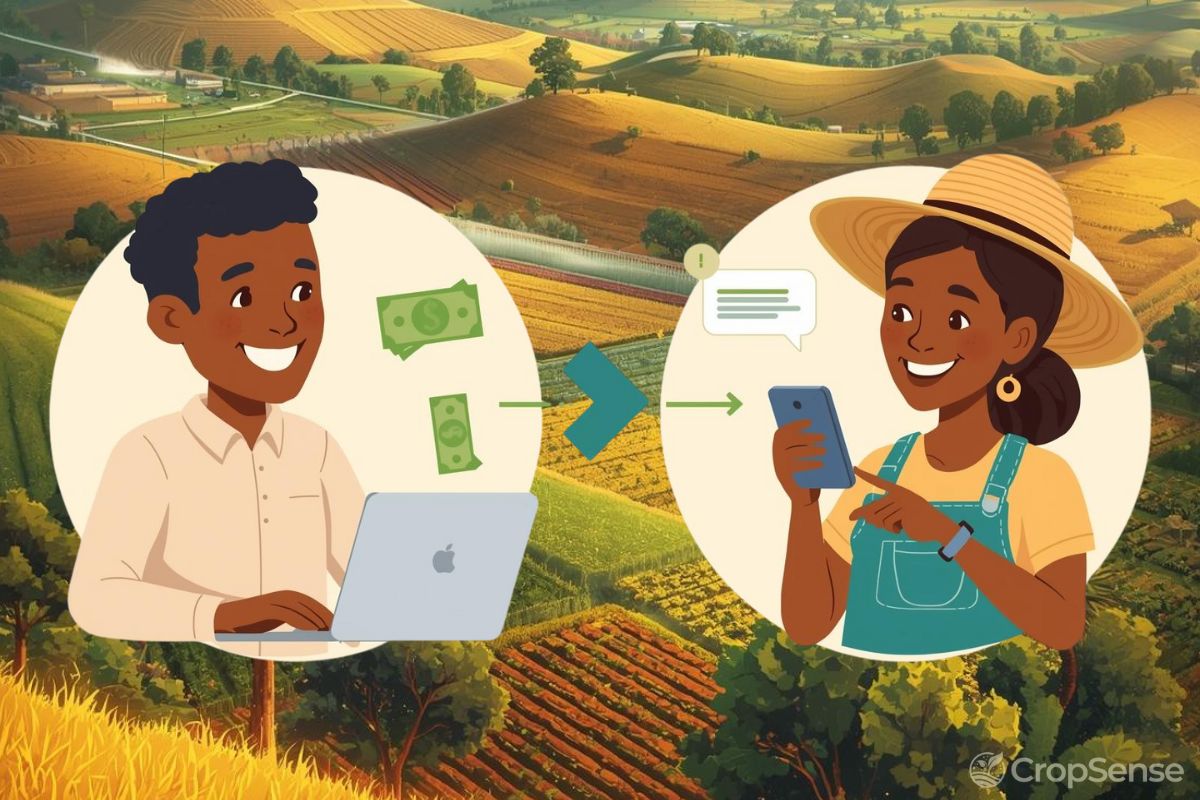
Breaking the Barrier: What Are the Primary Risks That Stop Banks from Lending to African Farmers?

For many financial institutions across Africa, agricultural lending is viewed as a high-risk gamble. While agriculture remains the backbone of the continent's economy, banks often shy away from providing credit to farmers and aggregators.
But why? The issue isn't a lack of opportunity, it is a lack of verifiable certainty.
When a lender looks at a traditional farm, they often see a "black box." They see unpredictable weather patterns, manual record-keeping, and a lack of collateral that meets traditional banking standards. Let's break down the primary risks that create this funding gap, and how data is finally bridging the divide.
The Seven Pillars of Agricultural Lending Risk
1. The Information Asymmetry Gap
Traditional farming often relies on anecdotal evidence. A farmer might tell a bank they expect a 10-ton yield, but without a digital record of past performance, soil health, or planting history, that figure is just an estimate. For a bank, uncertainty is the enemy of credit approval. Without granular, objective data, lenders have no way to verify the true productivity or risk profile of the operation.
2. Climate and Production Volatility
Agriculture is inherently exposed to the elements. Droughts, floods, and pests can wipe out a season's investment in days. Because traditional lending models often lack real-time monitoring tools, banks are left blind to these threats until it is too late, often when the farmer is already unable to repay the loan.
3. The "Collateral Trap"
Conventional banking requires tangible collateral — land titles, physical assets, or cash deposits. However, much of Africa's most productive farming land operates under customary tenure or lacks formal registration. When land cannot be easily leveraged as collateral, banks are forced to deem the entire sector "unbankable."
4. Market and Price Volatility
Farmers often face significant price fluctuations due to supply shocks, poor infrastructure, and a reliance on informal middlemen who dictate terms. Because many smallholders lack formal offtake contracts, their revenue remains unstructured and difficult for a bank to forecast. Banks view this unstructured revenue as a major liability, as it cannot reliably service structured debt obligations.
5. Lack of Specialized Intelligence
Most financial institutions lack the infrastructure to account for the unique cycles, water requirements, and soil risks associated with specific crops or geographies. Instead of utilizing accurate farm-level data, loan officers are often forced to rely on generic credit models and rough proxies that consistently misprice risk. This failure to understand specific regional or crop-based exposures prevents banks from accurately underwriting agricultural loans.
6. High Operational Costs
The cost of reaching rural borrowers through manual due diligence, field visits, and agent networks often makes small-ticket agricultural loans economically irrational. Assessing a modest loan through the same intensive process as a large corporate facility creates a cost-to-income ratio that renders the business unsustainable. Consequently, banks prioritize larger, accessible borrowers, leaving smallholders underserved despite their potential creditworthiness.
7. Portfolio Monitoring Gaps
Agricultural loans require ongoing oversight throughout the crop cycle, yet most banks lack the capability to track performance post-disbursement. If a bank only discovers a default after a crop failure or market disruption has occurred, they lose all opportunity to restructure terms or activate insurance. This "blind" approach to portfolio management exposes lenders to significantly higher risks than they realize at the time of initial funding.
According to the World Bank, the agriculture finance gap in developing countries exceeds $170 billion annually, with smallholder farmers being the most underserved segment.
Changing the Narrative: From "Risk" to "Reliability" with YieldRank
The barriers listed above are not insurmountable. The solution lies in shifting from collateral-based lending to performance-based lending. This is where YieldRank changes the game.
YieldRank is our proprietary credit-scoring engine designed specifically for the African agricultural landscape. It transforms raw satellite and agronomic data into a clear, reliable "credit score" for farms.
Here is how it directly mitigates the risks banks fear:
- Replacing Anecdotes with Analytics: YieldRank pulls from years of satellite imagery and historical crop performance data. It provides banks with an objective, bird's-eye view of a farm's productivity, removing the need to rely solely on the farmer's manual records.
- Real-Time Risk Monitoring: Because YieldRank is powered by ongoing data collection, it helps lenders track crop health throughout the season. If a "black swan" event occurs, the data is visible — allowing for proactive risk management rather than reactive loss-taking.
- Unlocking Collateral-Free Credit: By proving the historical viability and consistent yield output of a farm, YieldRank allows banks to base loan decisions on actual productivity rather than physical land assets. It turns a farmer's track record into their strongest asset.
The Future of Agri-Finance is Data-Driven
We are moving away from an era where farmers are denied credit simply because they don't look "on paper" like a traditional corporate borrower. By digitizing the farm and utilizing tools like YieldRank, we can give financial institutions the confidence they need to deploy capital into the agricultural sector.
When banks have the data to see the true potential of a farm, the funding gap begins to close. And when the funding gap closes, the entire agricultural ecosystem, from the smallholder to the major aggregator, can scale, modernize, and thrive. YieldRank is just one piece of a broader shift: see how alternative credit scoring, parametric insurance, PAYG financing, and bundled agritech ecosystems are jointly closing Africa's agricultural financing gap.
Is your institution ready to de-risk its agricultural portfolio? Explore how YieldRank can transform your lending operations today.