From Agronomy Graduate to Paid Field Agent: How to Monetize Your Agricultural Expertise
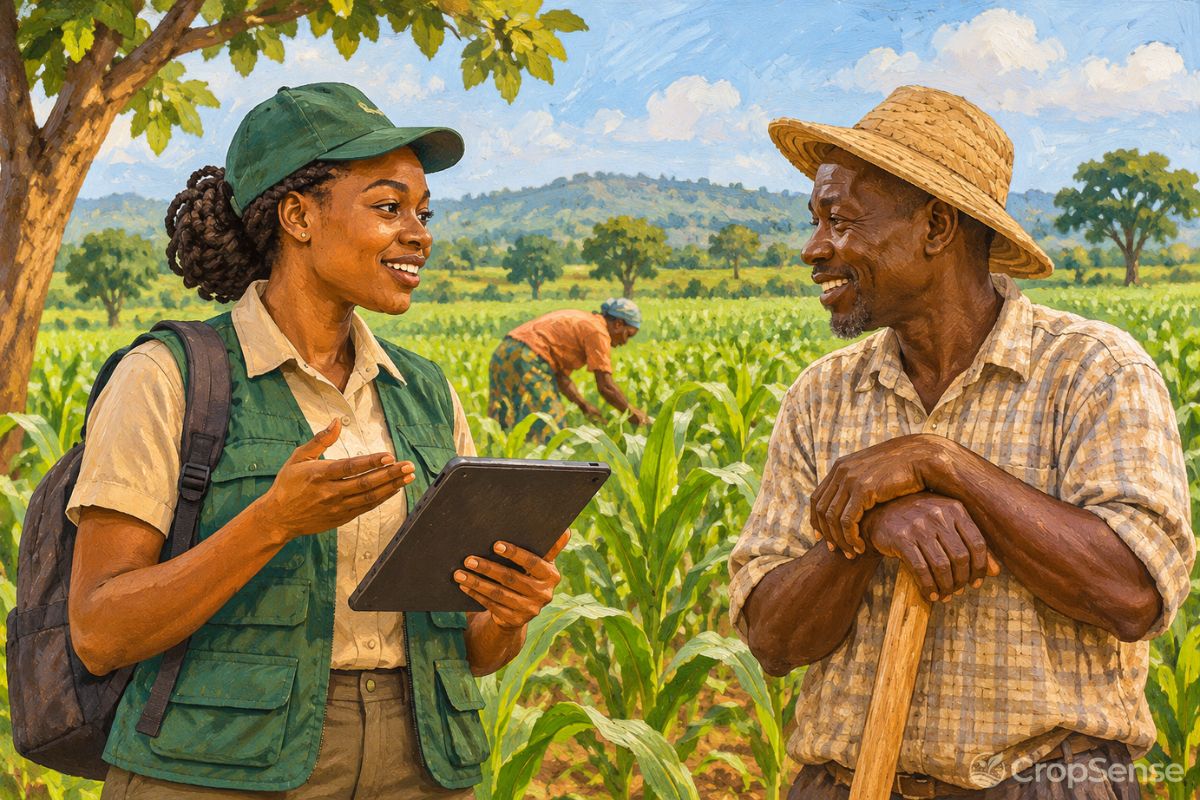
Every year, universities and colleges of agriculture across Africa graduate thousands of young people who can identify a nutrient deficiency from a leaf, tell a healthy maize stand from a stressed one and explain to a farmer why their planting date matters. Then many of them spend months, sometimes years, looking for work that actually uses those skills.
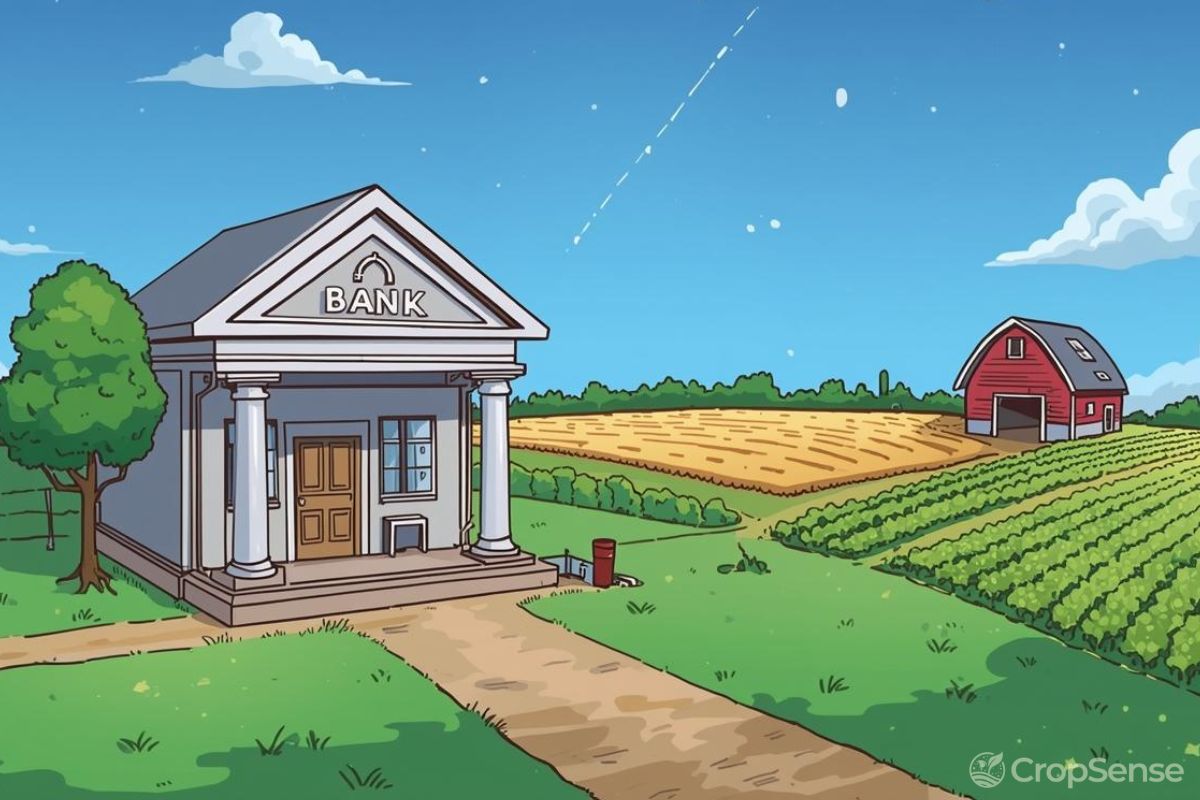
At the same time, banks, insurers, aggregators and development programmes are struggling with the opposite problem. They want to finance and support farmers, but they can't see the farms. They need someone on the ground who knows what a cassava field looks like at three months, who can walk a boundary accurately and who will report what is really there.
This article explains how that gap is turning into paid work for agricultural professionals, what field agents in the CropSense Agricultural Intelligence Network actually do, and how to get started.
The Gap Between Agronomy Education and Paid Opportunities
For many agronomy graduates, the path after school is unclear. Formal extension jobs are scarce, and in many places recruitment has slowed for years. Agribusiness roles often go to people with experience, and the experience is hard to get without the job. The result is familiar: skilled graduates take unrelated work, unpaid internships or short, irregular field contracts, and their agricultural knowledge slowly goes unused.
The work that does exist is often unstructured. A survey project hires enumerators for two weeks, pays late, then disappears. There is little training, no clear standard for quality and nothing that builds toward a track record you can show the next client.
Meanwhile, agriculture itself is becoming more data-driven. Lenders are starting to use satellite data to assess farm loans, insurers are moving toward index-based products and programmes are tracking farms season by season with remote sensing. The strongest results come when that technology is paired with trusted evidence from the field.
What Is the CropSense Agricultural Intelligence Network?
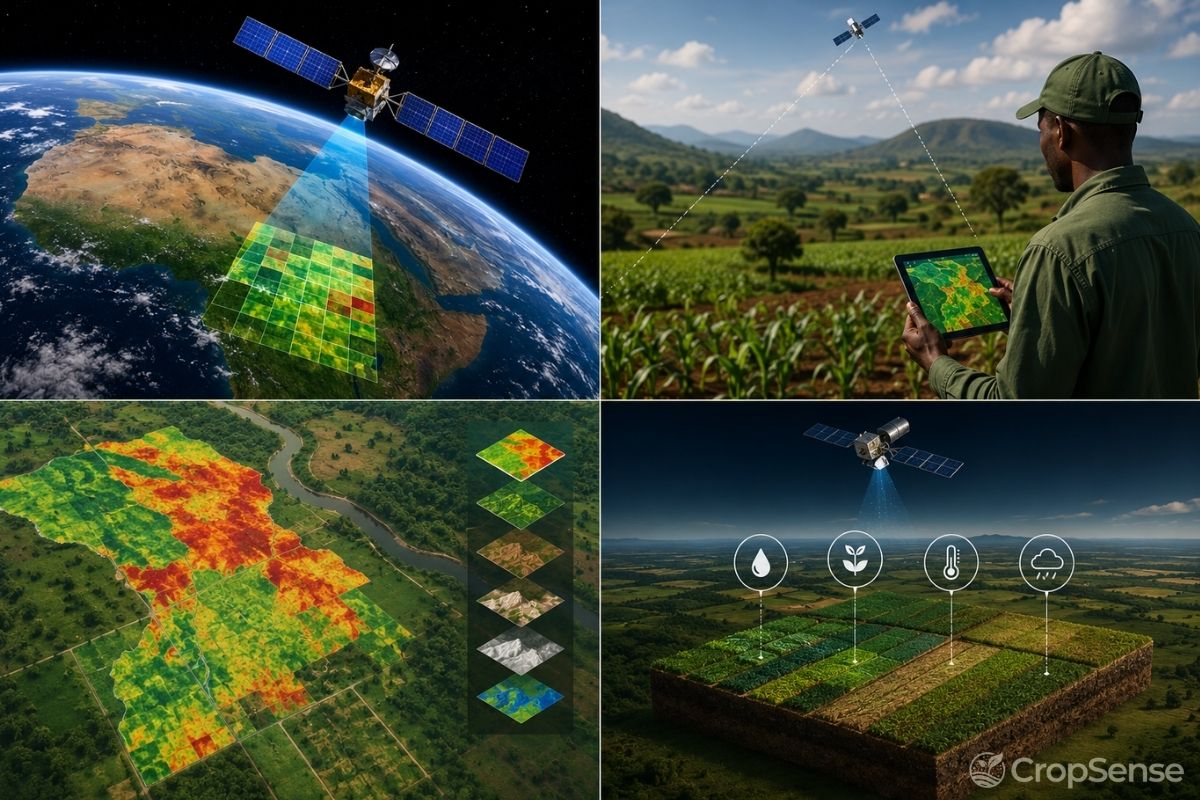
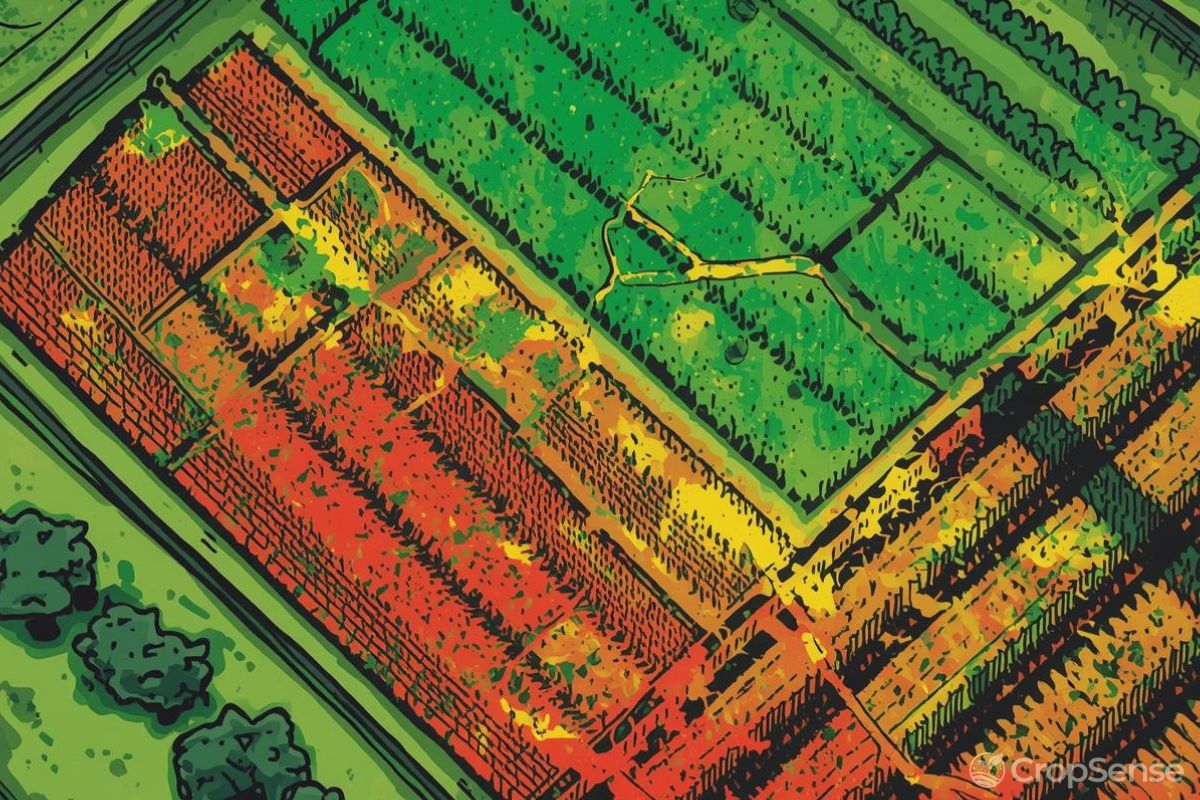
CropSense monitors farms from space. Satellite imagery tracks vegetation health, crop growth, rainfall and stress across every registered field, and vegetation indices show how a crop is developing over the season. That intelligence feeds products such as YieldRank and YieldSecure, which helps lenders and insurers assess farm-level credit and insurance risks.
Ground-truth data makes that intelligence even stronger. A precisely mapped farm boundary sharpens every acreage and yield estimate built on it. A confirmed crop type and planting date anchors the satellite record for the whole season. And when satellite monitoring flags a change in crop health, a field visit adds the on-the-ground detail, whether flooding, pests or an early harvest, that gives lenders and insurers complete confidence to act.
The CropSense Agricultural Intelligence Network brings these two sources of evidence together. It is a certified network of agronomists, extension officers, field enumerators and local partners who verify farms, collect ground-truth observations and confirm what satellites see. Satellites show what is changing. Trained people in the field confirm what is true.
Why your work matters: every observation you submit feeds intelligence used in real lending, insurance and programme decisions. Accurate ground-truth data is what makes satellite-based credit scoring and risk assessment trustworthy enough for a bank to act on.
What You'll Do as a Paid Field Agent
Field Intelligence Agents take on assignments in the farming areas they know. Most tasks fall into three groups.
| Task | What you do | Why it matters |
|---|---|---|
| Farm boundary mapping | Walk the edges of a plot and capture an accurate GIS polygon of the field | Accurate boundaries are the foundation for acreage, yield estimates and satellite monitoring |
| Ground-truth verification | Confirm the crop type, acreage, planting date and growth stage on the ground | Lets lenders and programmes trust that the farm and crop they are financing really exist |
| Agronomic inspections | Document pest stress, flood or drought damage, disease and soil conditions with photos and notes | Explains unusual satellite alerts and supports insurance and loss assessments |
Farm boundary mapping. Many smallholder farms have never been formally mapped. A boundary drawn from memory, or a single GPS point, can easily overstate or understate a farm's size. Field agents walk the plot and record a precise polygon, so that every acreage figure, yield estimate and satellite reading that follows is tied to the right piece of land.
Ground-truth verification. Before a lender finances a farm or a programme enrols it, someone needs to confirm the basics: is there a crop, which crop is it, how big is the field, when was it planted and what stage has it reached? Your agronomy training is exactly what this work calls for. Telling an early-season maize stand from sorghum, or estimating crop stage accurately, is easy for a trained eye and hard for anyone else.
Agronomic inspections. When satellite data flags a problem, an agent visits the field to document what is happening, whether that is fall armyworm damage, waterlogging after heavy rain, drought stress or poor soil conditions. These inspections help lenders and insurers understand risk, and help farmers get the right support.
Every task is handled through the CropSense network platform, which manages training, task assignment, evidence capture and quality review. You focus on accurate work in the field; the platform handles the rest.
How Earnings Work
The network is built around paid assignments, not a fixed salary. Here is how it works in practice:
- You are paid per assignment. Each farm verification, boundary mapping task, inspection or survey is a discrete piece of work, and you are paid for every assignment that passes validation.
- Quality counts more than volume. Submissions are checked against satellite evidence and independent review. Duplicate farms, implausible boundaries and repeated records are flagged before they reach a client. Accurate, honest work is what keeps you earning.
- You work where you already are. Assignments are matched to the area you register for, across targeted farming clusters, so you can work near home instead of travelling across the country for a short contract.
- You choose how much to take on. Because the work is task-based, you can fit it around studies, another job or your own farm, and take on more assignments as you build experience.
- Your track record grows. Every validated assignment adds to a verifiable record of field work, which is the kind of experience that is hard to show from short, informal survey jobs.
Beyond individual field work, the network also includes paid roles for Distribution Partners, such as cooperatives, aggregators and extension organisations who bring their farmer networks into CropSense, and Certified Implementers, the trained consultants, geospatial specialists and agritech firms who set up farm registries, train users and integrate CropSense solutions.
What It Takes to Be a Good Field Agent
Your degree or field experience is the starting point, but the agents who do best share a few habits:
- Local knowledge. You know the crops, seasons, farming practices and communities in your area, and farmers are comfortable speaking with you.
- Accuracy over speed. A carefully walked boundary or an honest "the crop isn't there" is worth more than a rushed submission.
- Respect for consent and privacy. Agents collect only the information an assignment needs, with farmer consent recorded.
- Clear boundaries. Network members never promise farmers loan approval or present a YieldRank score as a lending decision. Final credit decisions always remain with the financial institution.
How to Get Started
The CropSense Agricultural Intelligence Network is currently available in Nigeria and Kenya. Getting from sign-up to your first paid assignment takes five steps:
- Apply: create your network account, then choose your role and the area you work in.
- Get verified: complete ID checks and CropSense field training.
- Receive tasks: get farm checks, inspections and surveys in your area.
- Submit evidence: capture farm boundaries, photos and notes through the network platform.
- Get paid: earn for every validated assignment.
Frequently Asked Questions
Who can join as a field agent?
Agronomists, agronomy and agricultural science graduates, extension officers and field enumerators who know the farming areas they work in. Every applicant completes ID checks and field training before receiving assignments.
Is this a full-time job?
No. Field agent work is task-based and paid per validated assignment, so you decide how much to take on and can combine it with other work or study.
Which countries does the network operate in?
The network currently operates in Nigeria and Kenya.
Final Thoughts
Africa's agricultural finance and data systems need people who understand farms, not just people who understand software. If you have spent years learning how crops grow, how soils behave and how farmers work, that knowledge has real value. The CropSense Agricultural Intelligence Network is one way to turn it into paid, structured work, close to home, while helping more farmers get access to the finance and support they need.
Ready to put your agricultural expertise to work? Join the CropSense Agricultural Intelligence Network or learn more about field agent roles.