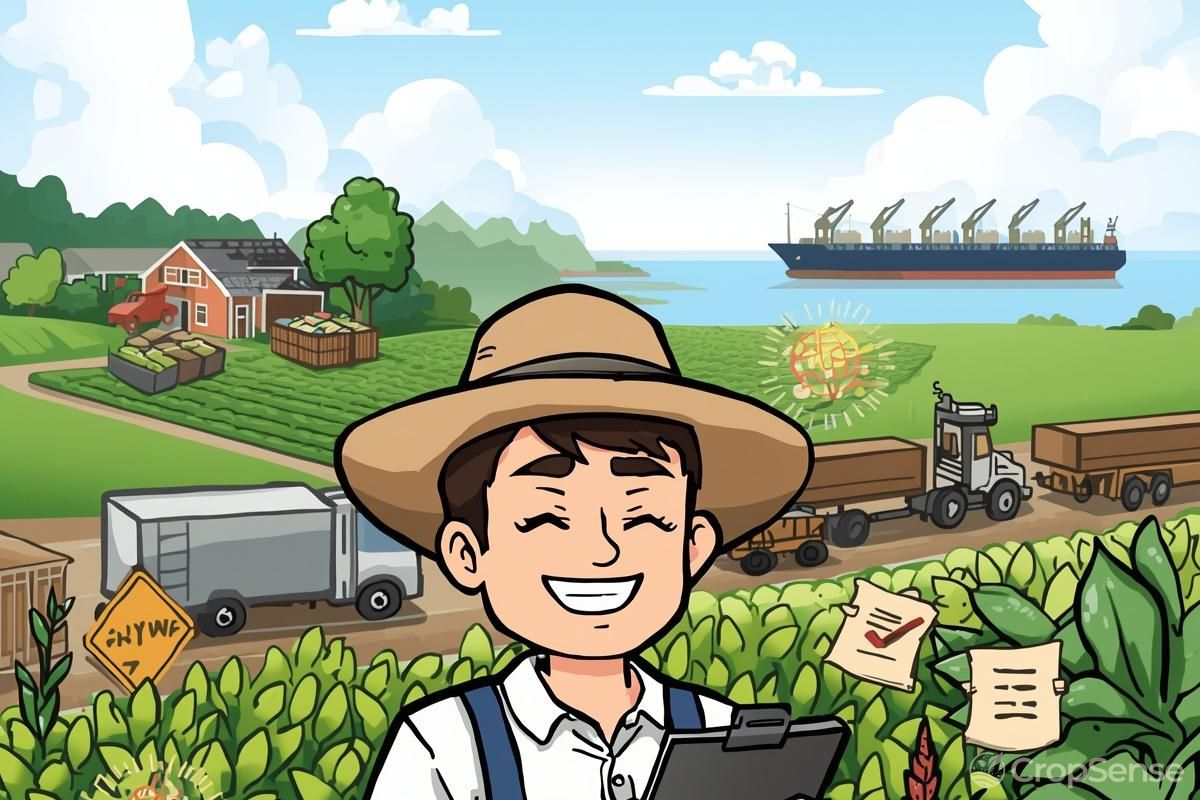
Digitizing Outgrower Schemes: How Large Aggregators Control Quality and Yield at Scale
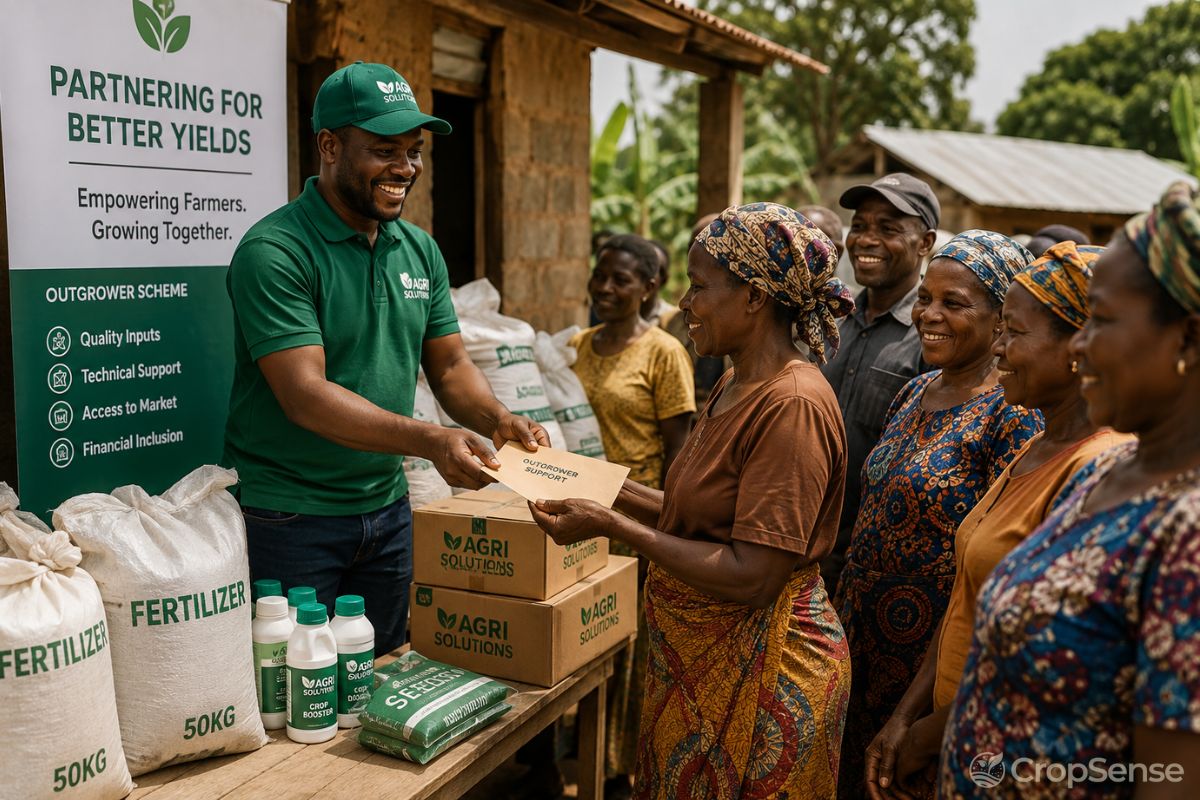
Managing an outgrower scheme in African agriculture is an exercise in complex logistics. For commercial aggregators, food processors, and agro-exporters, the biggest challenge is rarely finding farmers. It is knowing what is happening across thousands of farms between registration and delivery.
An aggregator may have 2,000 farmers under contract, 5,000 hectares across multiple locations, and a clear procurement target for the season. On paper, the supply plan looks straightforward. Relying on periodic, manual field reports from extension agents leaves critical blind spots. By the time a corporate manager discovers pest infestations, poor input usage, or a delayed harvest, the financial and operational damage is already done.
To build a predictable, high-yield supply chain, leading aggregators are shifting from manual supervision to digital management engines.
The Three Core Failures of Traditional Outgrower Models
Executives usually describe outgrower problems as three separate headaches. They are one headache with three symptoms.
Side-selling and input leakage
When aggregators provide pre-season input financing (seeds, fertilizers, crop protection), they expect to recover those costs through guaranteed harvest off-take. However, without continuous monitoring, provided inputs are sometimes resold on the open market, or crops are side-sold to informal traders for immediate cash. Without real-time field visibility, enforcing contract compliance is nearly impossible.
Inconsistent quality standard
Export markets and processing plants demand strict uniformity in grain size, moisture levels, and chemical residue. In traditional schemes, smallholders apply inputs based on guesswork or blanket timing rather than data-driven agronomy. The result is a highly fragmented harvest where a significant percentage of produce fails quality control at the aggregation hub — the same gap that undermines export compliance and farm-to-port traceability.
Inaccurate yield projections
Aggregators need reliable tonnage estimates to fulfill off-take agreements with international buyers or food manufacturing plants. Traditional models rely on self-reported estimates from farmers or quick spot-checks by field officers. This often results in major discrepancies between projected supply and actual warehouse delivery, triggering severe breach-of-contract risks with buyers.
All three trace back to the same gap: the aggregator has contractual control over the crop but no continuous visibility into it.
How CropSense AI Digitizes Outgrower Management
Digitising an outgrower scheme is not about giving field officers an app. It is about building a system where the plot, the farmer, the input, and the delivered batch are all the same record.
CropSense AI provides enterprise aggregators with a unified management system designed to track, support, and evaluate thousands of outgrowers simultaneously. Here is how data-driven orchestration transforms outgrower schemes:
Boundary mapping and satellite verification
CropSense AI digitizes every individual farmer's plot boundary using high-resolution satellite imagery. The platform automatically monitors crop vigor (NDVI) and moisture levels (NDMI) across the entire outgrower network, flagging underperforming plots in real time.
Predictive yield analytics
Months before harvest, CropSense AI analyzes historical satellite data and real-time agronomic performance to calculate asset-grade yield projections. Aggregators gain precise visibility into expected tonnage per region, allowing them to optimize logistics, transportation, and buyer contracts well in advance.
Targeted field agent dispatch
Instead of field officers conducting random, costly site visits, CropSense AI directs them precisely where attention is needed. When an outgrower's plot shows signs of pest stress or nutrient deficiency, the system sends target GPS coordinates and clear, localized action plans directly to the field agent's mobile app.
Automated off-take scheduling
By tracking crop maturity velocity across different geographic clusters, the system helps aggregators schedule harvest times sequentially. This prevents post-harvest bottlenecks at aggregation centers and reduces field-to-lab spoilage, reinforcing the discipline behind sourcing high-quality yields consistently.
Unlocking Agri-Finance for Outgrowers with YieldRank
Beyond optimizing daily field operations, digitizing outgrower schemes creates a powerful financial byproduct: a verified digital track record for every participating farmer.
Historically, banks have viewed smallholders within outgrower networks as high-risk borrowers due to a lack of formal records. Through YieldRank, CropSense AI converts season-after-season satellite observations, compliance scores, and historical yield data into an institutional-grade credit profile.
This allows aggregators to partner with financial institutions to de-risk input financing. Banks can confidently fund outgrower schemes because the underlying farm performance is continuously audited by AI data rather than guesswork.
Building a Scalable, Audit-Ready Supply Chain
The future of agricultural aggregation relies on transparency. Aggregators can no longer afford to operate blind, absorbing losses from side-selling, low yields, and unmonitored field operations.
By unifying field operations, satellite monitoring, and credit intelligence into a single engine, CropSense AI empowers aggregators to scale their outgrower networks efficiently — protecting margins, securing quality supply, and driving sustainable growth across the entire value chain.
Ready to digitize and scale your outgrower network? Book a demo with the CropSense AI team today.